
mold-making
Traditional Mold-Making.
Stoneware clay, Monster clay, Sculpey and Ultracal.
In order to achieve highly detailed silicone casts for puppets, I resort to using the traditional method of mold making by sculpting a figure in the final scale and creating a 2-part mold with cement (Ultracal).
This method allows me to preserve the "hand built feel" of the puppet by choosing to keep certain decisions while sculpting.
Before pouring the UltraCal I make sure to prepare the mold with a leak proof enclosure with registration points, release points, and vents.
Then I add a generous layer of Vaseline and mold-release making sure to be homogeneous.
Finally, I start the mixing of the UltraCal and slowly pouring it to one of the inside walls of the enclosure to avoid air pockets.


Digital Mold-Making.
Monster clay, 3D scanner, 3D modeling software and 3D PLA Printer.
In order to achieve a more efficient silicone casts for puppets, I resort to using the rapid prototyping and a digital method of mold making by sculpting a figure, 3d scanning it, creating a 2-part mold with a 3d modeling software and 3D Printing. cement (Ultracal).
This method allows me to create identical assets and modify them in a range of scales without having to re-sculpt
3D Printed Molds process.
-
This process starts by creating a 3D model of an asset or using polymer clay to sculpt a reference that i will later 3d scan and edit in a 3d Modeling software (Blender) to fit the design.
-
Then, I started adding meshes and modifiers to imprint a negative my sculpt into the desired shapes making sure to add keys, exit channels and registration points for the armature.
-
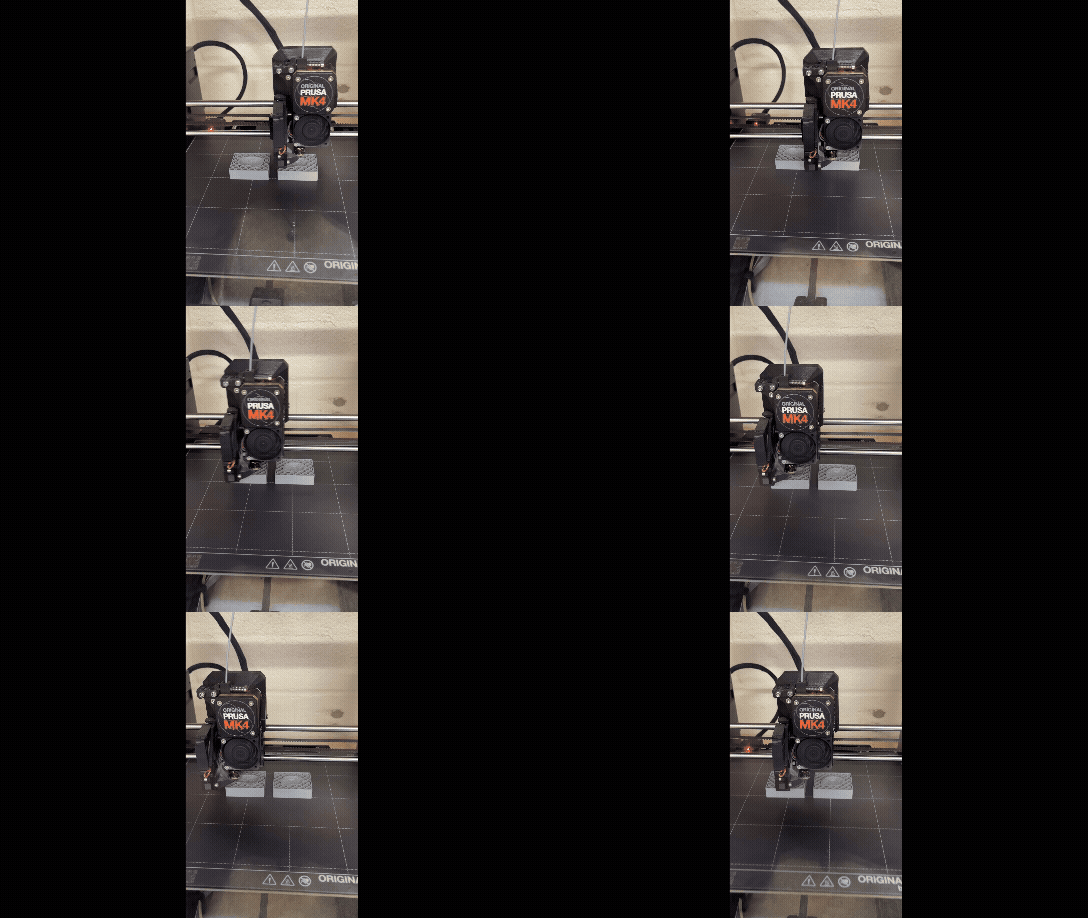
Finally, I slice the model in my 3D Printing software and print it using PLA.


1.Clay bust
2.3D Scanning
3.3D Modeling and Printing


Silicone casting.
Dragon Skin Smooth-On silicone, Silc Pig, Psyco-Paint and Chalk Pastels.
After the molds are cured and completed, I begin the process of silicone casting by cleaning the mold with a sterilized brush. Then I add a release agent and brush the mold for an even coat.
Once the release agent sets, I go ahead and mix a 1:1 ratio of silicone rubber and medium until well incorporated. Throughout this process I make sure to slowly add pigments until I reach my selected shade. Then I brush a thin layer of the silicone through the mold to avoid air bubbles and color variation. Finally, I add a second batch of silicone to cast the asset.
This method allows me to monitor the correct curing of the silicone and for the opportunity after demolding to continue adding details to the cast.